9 Wedding Food Serving Styles in Malaysia: A Complete Guide (2026)
The food format at your wedding shapes almost everything about your wedding day. The length of the reception, the flow of the evening, the venue setup, the number of service staff, and often the entire budget.
This guide covers 9 wedding food serving styles in Malaysia, with price range, best-fit scenarios, and tradeoffs for each.
1. Buffet line
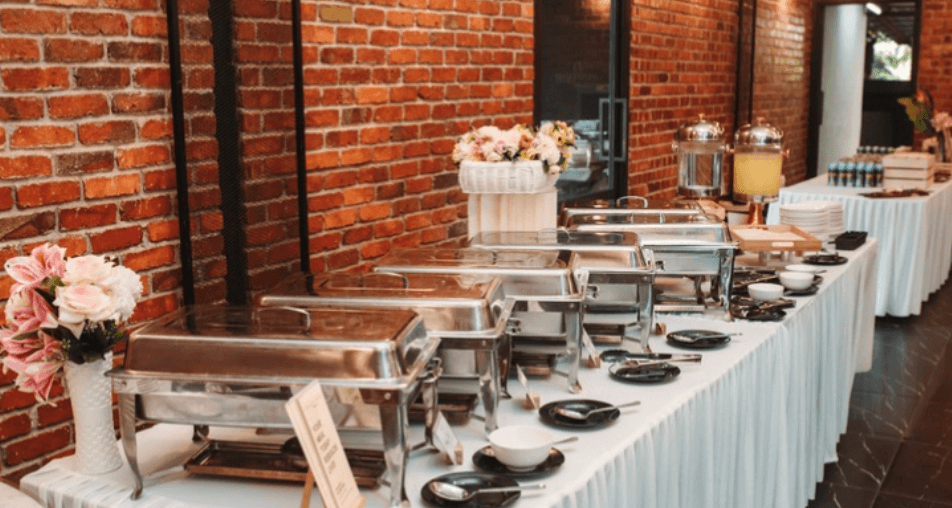
The easy format of Malaysian weddings, flexible and accommodating of every dietary need. This is also the format underlying the traditional Malay kenduri kahwin, where hundreds of guests come throughout an open-house celebration to serve themselves from spreads of nasi minyak, ayam masak merah, rendang, kuah dalca, and traditional kuih.
- Best for: Malay kenduri kahwin, multicultural weddings, mixed dietary needs (halal + vegetarian + kids), medium-to-large guest counts, garden and open venues, open-house celebrations
- Group size: 80 to 2,000+ pax (kenduri traditionally welcomes the whole community)
- Price: RM25 to RM80 per pax for reception-style buffet; RM15 to RM40 per pax for community-style kenduri catering
- Duration: Reception service typically runs 1.5 to 2 hours; open-house kenduri can run 4 to 6 hours with guests coming and going
- Setup: Requires buffet tables, chafing dishes, serving utensils, service crew, and clear queuing flow. Larger kenduri often use multiple buffet lines running in parallel to reduce queuing, with sit-down "makan beradab" service for the pelamin family and VIP tables.
- Downsides: Guests wait in queue, food quality varies from first to last serving, harder to control portions, less "special occasion" feel than plated
2. Plated multi-course dinner
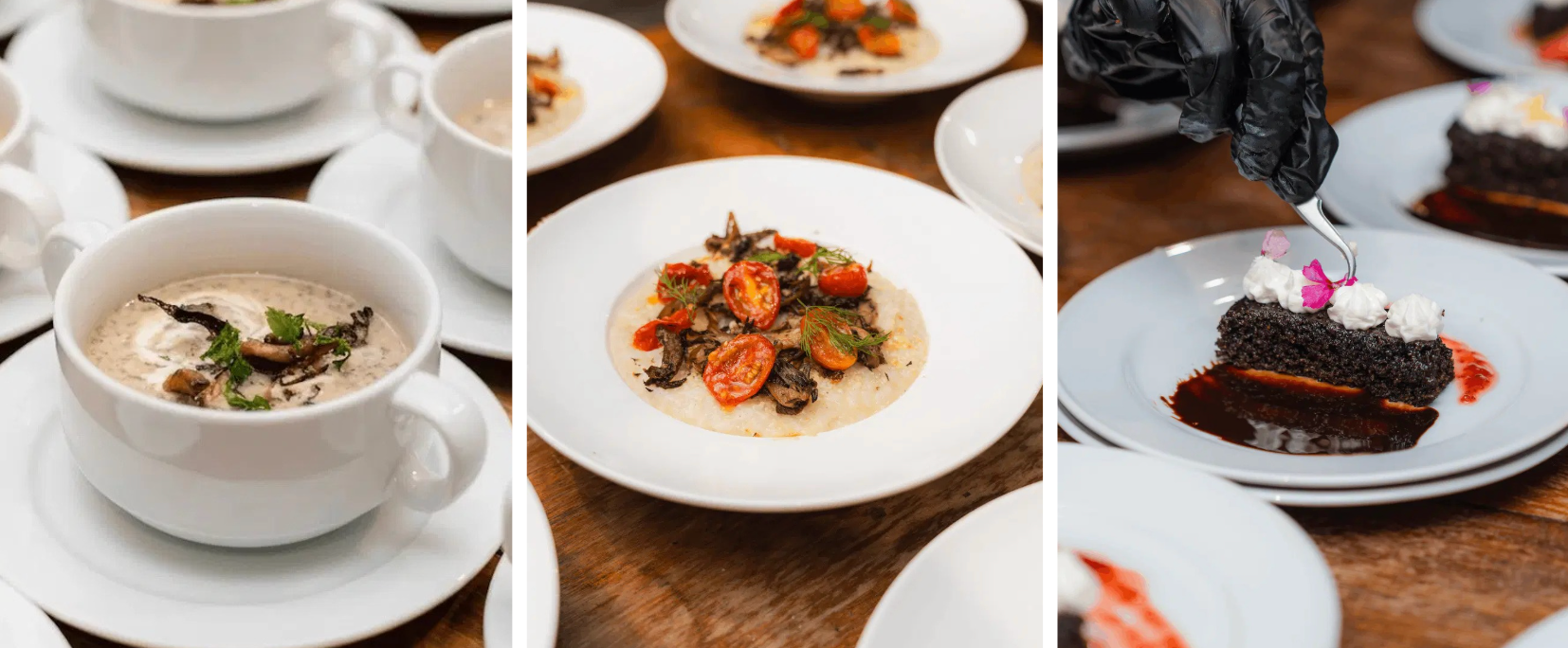
Individual pre-plated dishes served course-by-course to seated tables. Guests choose from usually 2 to 3 main options (chicken, fish, vegetarian) in advance, and every dish is plated in the kitchen and served hot to their exact seat. Typically 3 to 5 courses: starter, soup or salad, main, dessert, and often a palate cleanser.
- Best for: Formal weddings, ballrooms, seated dinners with a program (speeches, first dance, cutting the cake), couples who want a fine dining experience
- Group size: 50 to 500 pax (larger requires strong kitchen coordination)
- Price: RM120 to RM250+ per pax
- Duration: 2 to 2.5 hours with proper pacing
- Setup: Requires a full service kitchen, waitstaff for each table (usually 1 server per 2 to 3 tables), advance dietary counts, and seated table setup
- Downsides: Requires advance dietary counts, less flexible on the day, higher per-pax cost, kitchen coordination critical at scale
3. Dome service
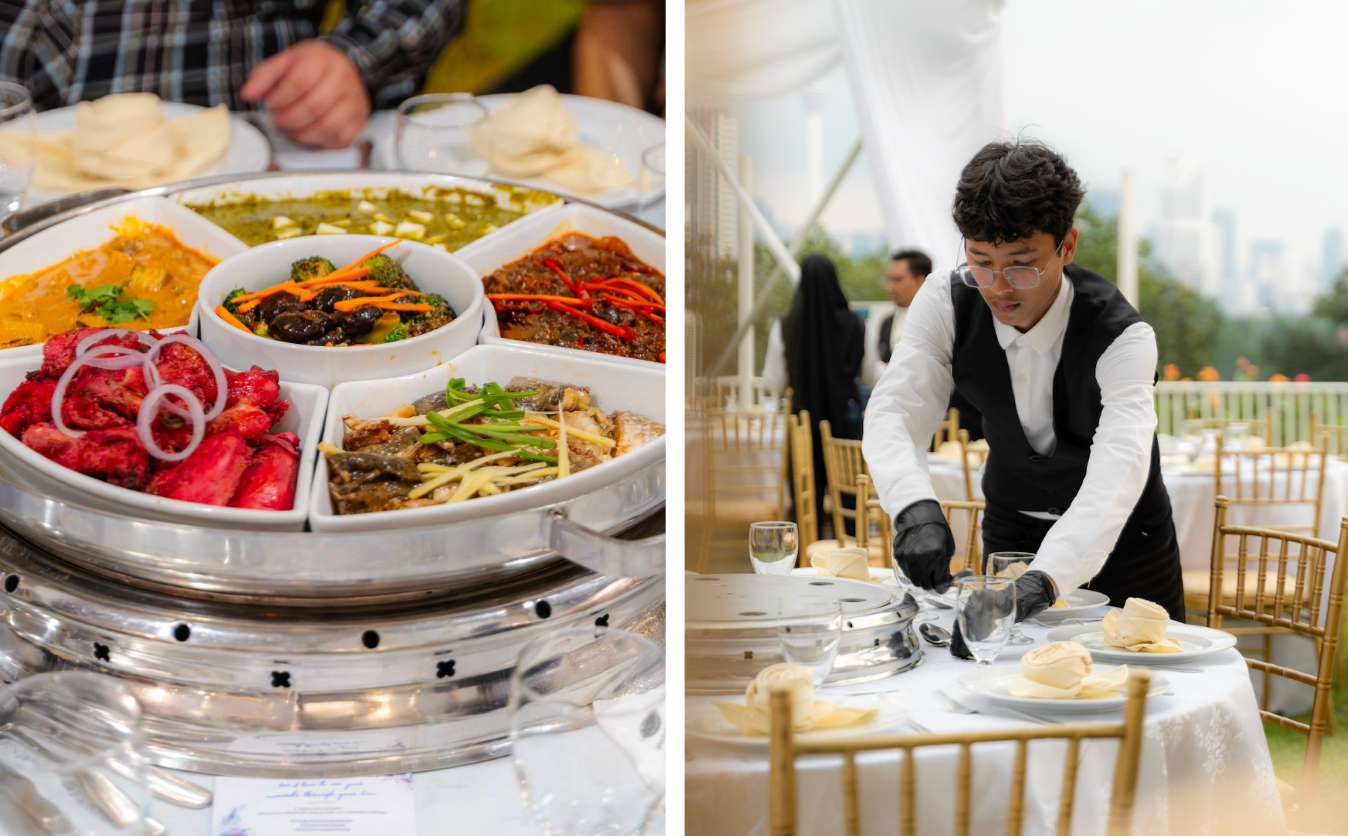
A premium presentation format where every dish is served under an individually covered dome lid.
Best for: VVIP head tables, intimate weddings, weddings where individual attention per dish matters
- Group size: typically 8 to 10 per dome
- Price: RM35 to RM80+ per pax
- Duration: 2 to 2.5 hours
- Setup: Requires trained service crew, quality dome ware
- Downsides: Formal atmosphere may not suit casual weddings, harder to execute at scale
4. Sharing / family-style
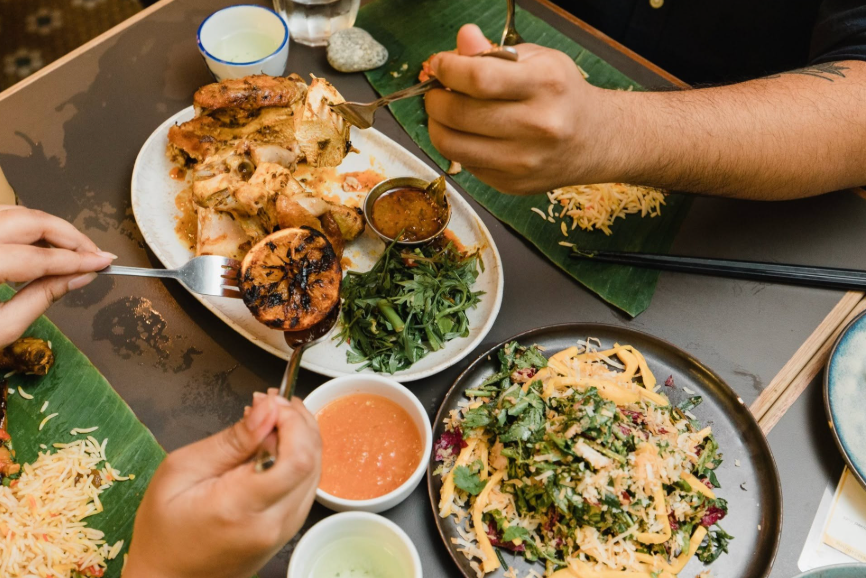
A middle ground between banquet and plated. Large platters of food arrive at each table and guests serve themselves and each other. Warm, communal, and increasingly popular for smaller weddings that want intimacy without the formality of plated service.
- Best for: Intimate weddings (under 150 pax), close-knit guest lists, couples who want conversation and connection rather than formal service, multicultural menus
- Group size: 30 to 150 pax (each table 8 to 10 guests)
- Price: RM80 to RM120 per pax
- Duration: 1.5 to 2.5 hours
- Setup: Requires larger tables, sharing platters, serving spoons at each table, and slower course pacing
- Downsides: Not ideal for very large weddings (500+), harder for guests with strict dietary restrictions, tables need to be larger to accommodate platters
5. Live stations
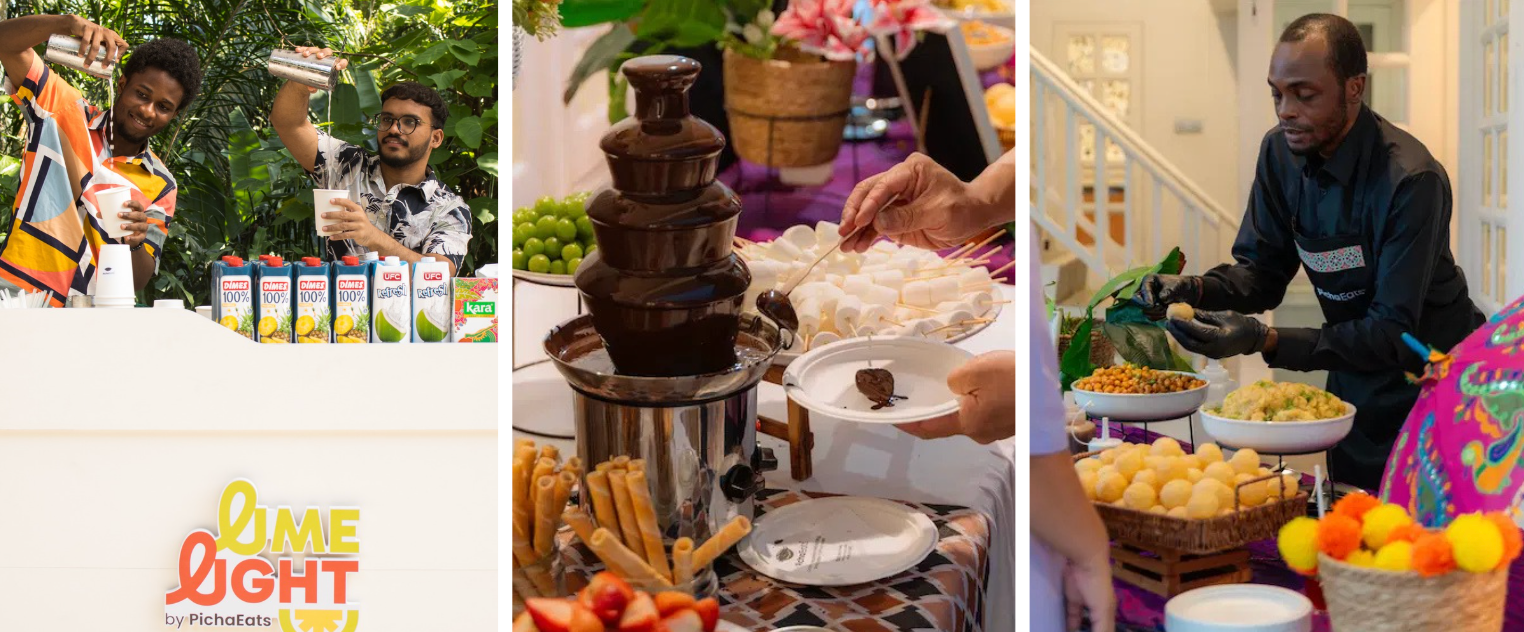
Multiple stations around the venue where chefs cook individual dishes to order in front of guests. Popular stations include laksa or curry mee, ice kacang pasta, satay, teppanyaki, dim sum, cendol or tongshui, chocolate fountain, and pani puri. Often paired with a buffet line for the main food, with live stations as premium add-ons.
- Best for: Cocktail-style receptions, weddings that want to feel like a food festival, longer receptions (3+ hours), multicultural weddings that want to showcase Malaysia's food diversity
- Group size: 80 to 1000 pax
- Price: RM8 to RM30 per station per pax;
- Duration: Stations run throughout the reception, typically 2 to 3 hours
- Setup: Requires space for each station, live cooking equipment, extraction, and one chef per station
- Downsides: Requires more space and equipment, guests need to move between stations, harder for elderly guests who prefer seated meals
6. Canapé and cocktail reception
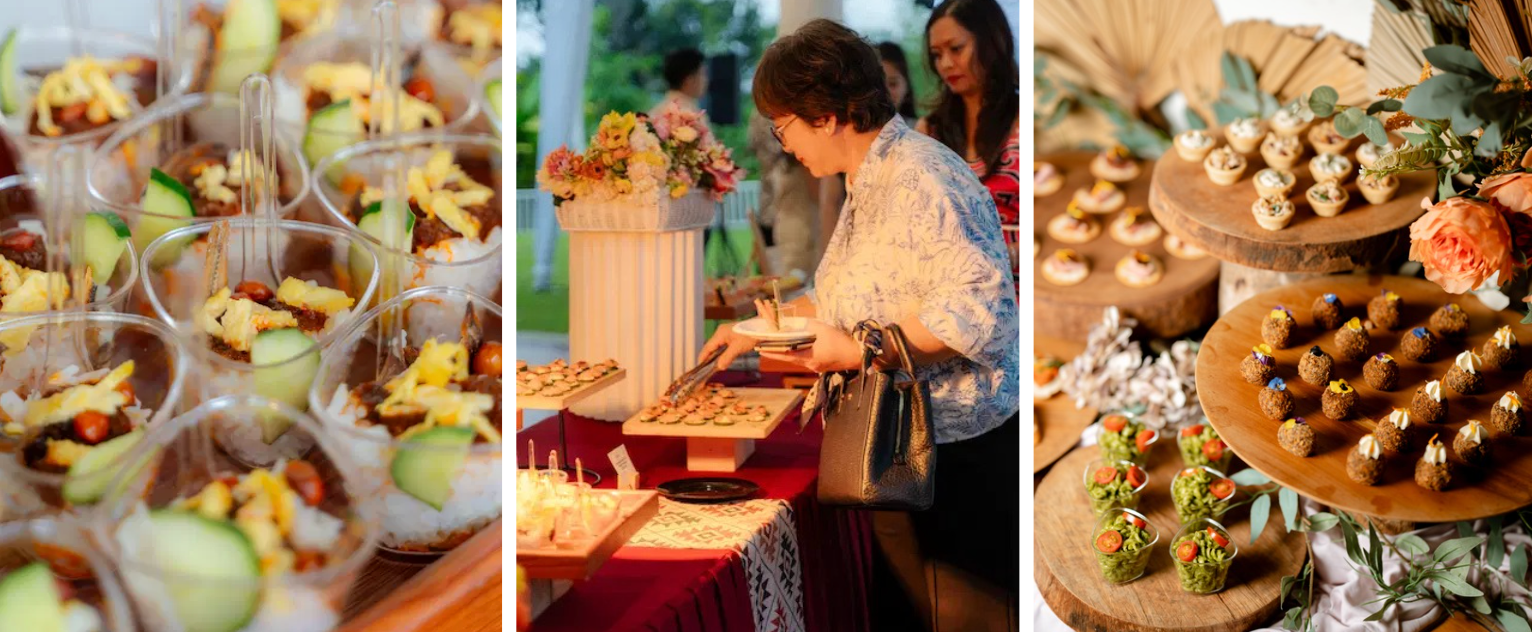
Small, elegant bites passed by servers throughout a standing reception. Guests stand and mingle with drinks in hand, and canapés circulate on trays every few minutes.
Best for: Wedding receptions before or after a main meal, intimate cocktail-hour weddings, casual garden receptions, weddings that prioritise mingling over sit-down dining
- Group size: 30 to 400 pax
- Price: From RM1,500 for basic canapé selection
- Duration: 1.5 to 3 hours
- Setup: Requires trained service crew for passing, standing tables (cocktail tables), and drink stations
- Downsides: Not a full meal (guests may need dinner afterwards), harder for elderly guests who prefer to sit, requires more service staff per guest than seated formats
7. Food trucks
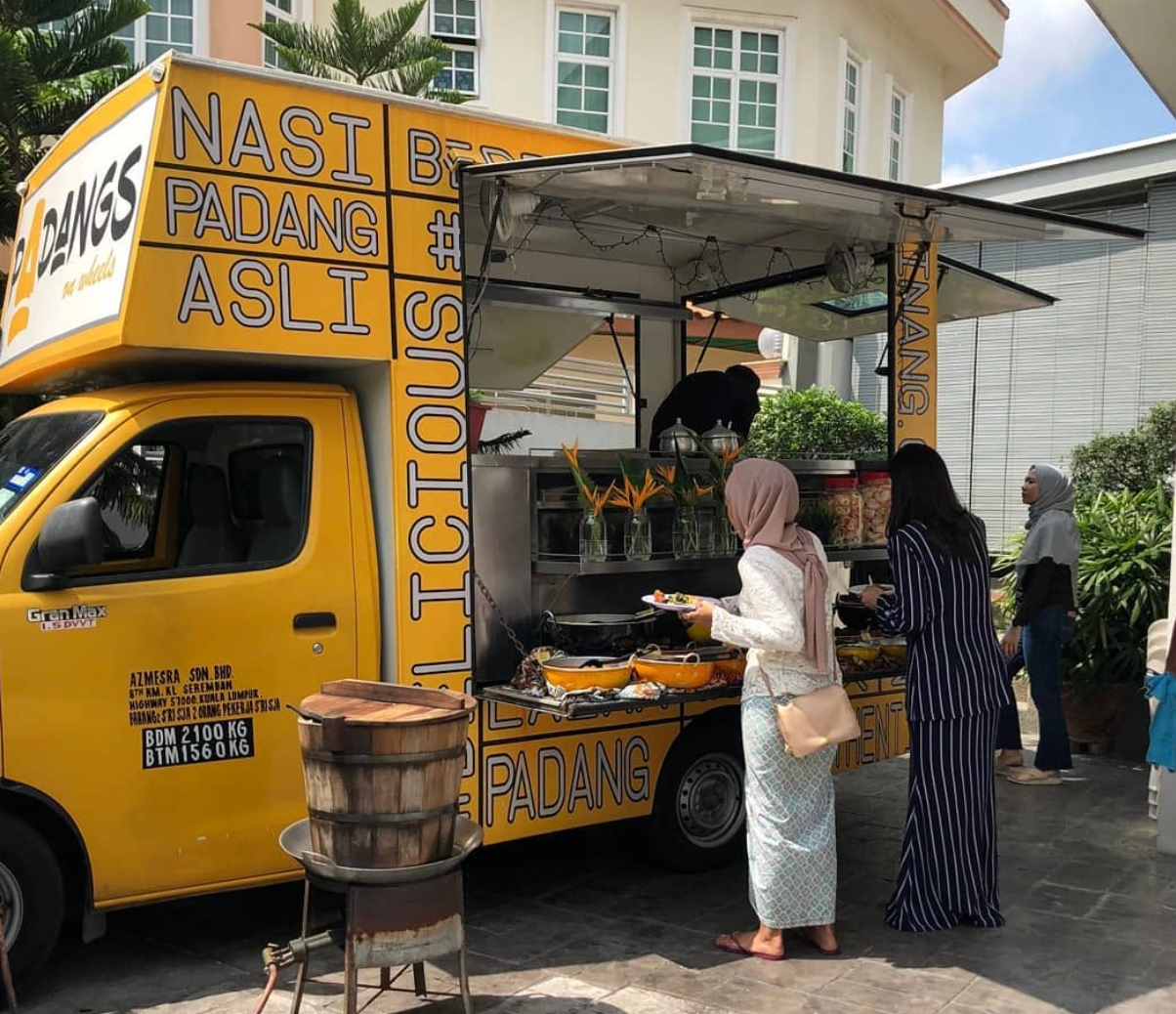
Photo Credit: Padang on the Wheels
The most casual wedding food format, often used for garden weddings, farm weddings, or wedding after-parties. Multiple food trucks or mobile stations park at the venue, and guests order directly from each truck. Popular options include coffee, burger trucks, taco stations, gelato carts, coffee trucks, and roti canai carts.
- Best for: Garden or outdoor weddings, casual afternoon receptions, wedding after-parties, weddings that want a festival atmosphere
- Group size: 80 to 400 pax
- Price: RM25 to RM60 per pax depending on food truck selection
- Duration: Trucks operate 2 to 4 hours throughout the reception
- Setup: Requires venue with outdoor space, truck access, power supply, and clear signage
- Downsides: Weather-dependent for outdoor setups, harder to coordinate timing, guests wait at each truck
8. Chinese banquet
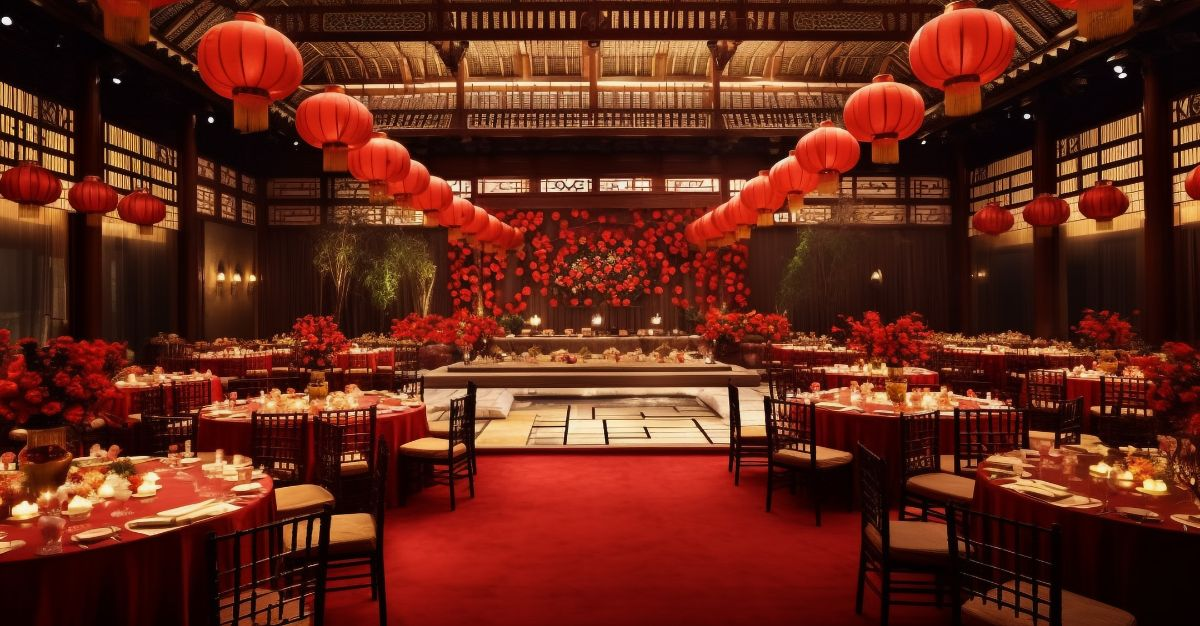
Photo Credit: The Qing
The most traditional Malaysian Chinese wedding format. Guests sit at round tables of 10, and 8 to 10 shared dishes are brought out course by course over 2 to 3 hours. Symbolic dishes are usually part of the menu - whole roast chicken opens the meal, followed by seafood, fish (yu means abundance), noodles for longevity, and a sweet dessert to close.
- Best for: Traditional Chinese weddings, larger family gatherings, guests who expect symbolic courses, banquet-hall venues
- Group size: typically 20 to 100 tables (200 to 1,200 pax)
- Price: RM1,500 to RM4,500 per table at Chinese restaurants; RM1,800 to RM5,500 per table at hotel banquet halls (RM150 to RM550 per pax)
- Duration: 2.5 to 3.5 hours
- Setup: Requires a Chinese restaurant or banquet hall with round tables and rotating lazy susans
- Downsides: Long service (guests can be seated 3+ hours), harder for guests with dietary needs, expensive per table, less interactive
9. Banana Leaf Sadhya
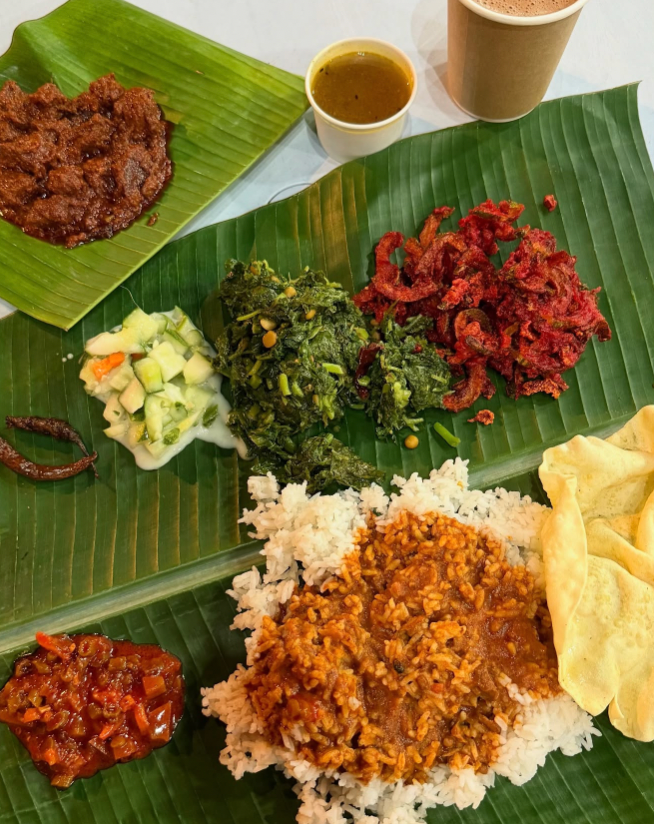
Photo Credit: eat.with.aishwarrya
The most traditional Malaysian Tamil Hindu wedding format, especially in temple. Guests sit at long tables, and a full meal of rice, curries, vegetables, pickles, papadum, sweets, and payasam (kheer) is served on a banana leaf.
- Best for: Traditional Tamil Hindu weddings, family and community-based receptions, ceremonial meals served immediately after the wedding rites, temple hall venues
- Group size: typically 100 to 800 pax
- Price: Varies significantly by community, venue, and menu extent. Contact specialist Tamil wedding caterers for accurate quotes.
- Duration: 1 to 1.5 hours (the meal itself is efficient, though the wedding ceremonies before can span most of the day)
- Setup: Requires long tables and benches, fresh banana leaves (usually one per guest), and servers who understand the traditional arrangement and serving sequence
- Downsides: Requires specialist caterers who understand the traditional layout, harder for guests unfamiliar with eating from a banana leaf by hand, almost always vegetarian which may not suit mixed-diet receptions, some contemporary weddings run buffet extensions alongside for larger guest counts
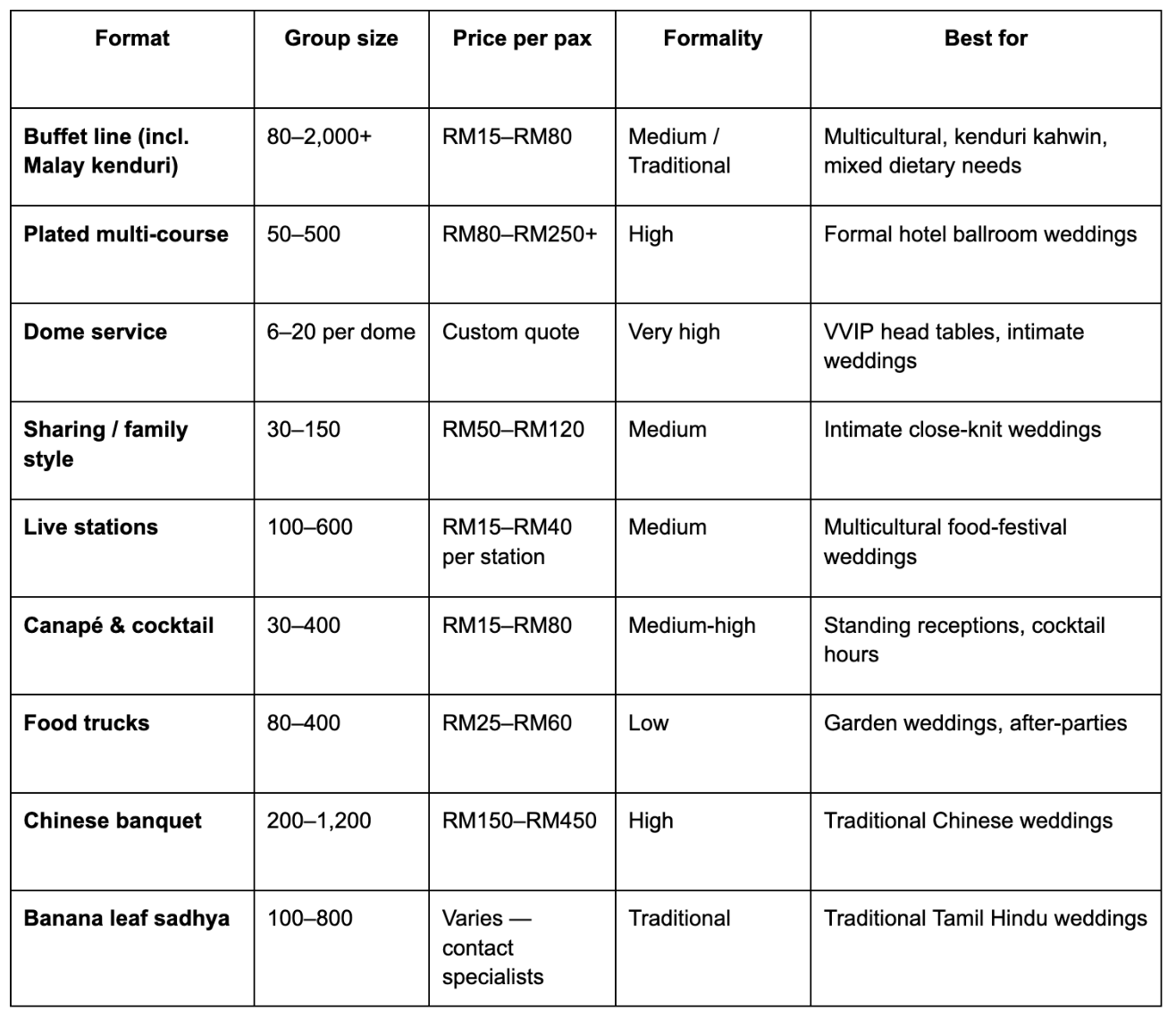
Quick comparison - which format fits your wedding?
How to choose the right wedding food serving style
Four questions to work through in order:
1. How many guests are you catering for?
Under 50 pax opens up dome service and sharing family-style. 50 to 150 works for almost any format. Over 500 narrows you towards buffet, plated (with strong kitchen coordination), or Chinese banquet.
2. Is your wedding halal-required?
Halal weddings work best with halal buffet, plated multi-course from halal-specialist caterers, sharing style, live stations, and canapé formats. Chinese banquet in a halal format is available but menu selection is more limited.
3. What venue have you booked?
Hotel ballrooms suit plated multi-course, dome service, and Chinese banquet. Garden venues work well for buffet, food trucks, live stations, and canapé receptions. Restaurants often lock you into their in-house format.
4. What atmosphere do you want?
Formal and structured → plated, dome, or Chinese banquet. Warm and communal → sharing family-style. Interactive and celebratory → live stations, canapé, or food trucks. Practical and flexible → buffet.
Speak to us for a discovery session!
Combining formats — the modern Malaysian wedding
Many contemporary weddings in KL and the Klang Valley now combine two or three formats to shape the flow of the evening:
- Cocktail hour + plated dinner — canapés and drinks for the first hour while guests arrive, followed by seated plated dinner
- Buffet + live stations — main food from buffet, premium live stations (laksa, dessert, roti canai) as add-ons
- Plated main + dessert live station — traditional plated dinner with an interactive dessert bar to close the evening
- Sharing style + food trucks — sharing platters at each table for the main course, food trucks outside for late-night snacks
- Dome for VIP tables + plated for the rest — head table gets dome service, other guests get standard plated
Combined formats let you shape the pacing of the evening — quiet during speeches, interactive during mingling, structured for the main meal.
Frequently asked questions about wedding food serving styles
Which wedding food style is cheapest in Malaysia?
The most budget-friendly wedding food format in Malaysia is buffet catering, which starts from around RM25 to RM35 per pax. Live stations added onto a buffet base can also be cost-effective at RM15 to RM40 per station.
Which wedding food style is most premium?
The most premium wedding food formats are plated multi-course dinners, which can run RM150 to RM250+ per pax. Both formats emphasise presentation and individual attention over shared abundance.
How far in advance should we book wedding catering in Malaysia?
Book wedding catering 3 to 6 months in advance for standard formats, and 6 to 12 months for popular weekend dates during peak wedding season (April to October). Premium plated caterers and popular Chinese banquet venues often book out 12+ months ahead.
Can we combine multiple wedding food styles in one event?
Yes, and many modern Malaysian weddings do. Common combinations include cocktail canapés before plated dinner, buffet with live station add-ons, plated main with dessert live stations, and dome service for VIP tables paired with plated service for other guests. Combining formats lets you shape the pacing and atmosphere of different parts of the evening.
Which format does PichaEats offer for weddings?
PichaEats caters weddings across the Klang Valley in five formats: halal buffet, plated multi-course, sharing family-style, live stations, and canapé receptions. Our multicultural menus fold Middle Eastern touches (from our chef families' Syrian, Palestinian, Afghan, and Pakistani cuisines) into Malaysian and Western wedding formats - a different offering from most Malaysian wedding caterers.
- Group size: 80 to 2,500 pax
- Price: Halal buffet from RM26 per pax; plated multi-course quoted per menu
- Halal status: Halal-sourced ingredients, Muslim chefs from refugee families, JAKIM certification in progress
- Impact: Every catering order supports refugee chef families building livelihoods in Malaysia
Request a wedding discovery session from PichaEats
Article by the PichaEats team. PichaEats is a Malaysian social enterprise founded in 2016, partnering with refugee chef families from Syria, Palestine, Afghanistan, Pakistan, and Iraq to offer halal wedding catering, corporate catering, and Open House experiences across Kuala Lumpur and the Klang Valley.
Related reading: