The Complete Guide to Hosting a Meal at Home in KL (2026)
Hosting a meal at home can feel deceptively simple until you're 24 hours out and realising you don't know how many people are actually coming, what to serve, or whether you own enough plates. This guide walks through everything you need to plan in the right order, from headcount to the last brownie tower on the table.
Step 1: Confirm your headcount (seriously, confirm it)
The single biggest mistake home hosts make is guessing the headcount. "About 15 people" turns into 22 people and suddenly there's no chicken left for the aunties.
How to actually confirm:
- Send a WhatsApp group message with a RSVP deadline. Not "let me know if you can make it" but: "Please confirm yes or no by Wednesday 8pm so I can order food."
- Ask about plus-ones explicitly. "Are you bringing your partner/kids?" is a required question. Dont assume!
- Ask about dietary requirements upfront - vegetarian, vegan, halal, allergies, no beef, no pork. Get this on the RSVP, not on the day.
Step 2: Decide on the format - cook, order, potluck, or a mix?
Three main options for feeding your guests:
Option A: Order the whole meal
The lowest-stress option. One order and only one thing to manage. Ideal when you want to enjoy your own party rather than spending the morning cooking.
Best for: birthdays, milestone celebrations, work-heavy weeks, anyone who's done potluck-coordination once and never wants to do it again.
Option B: Full potluck
Every guest brings something. Zero cost to the host but can be a coordination nightmare if you dislike organising.
Best for: casual gatherings, groups of 6-10 close friends.
Warning: you might end up with 6 desserts and no mains. Assign categories, not "just bring something."
Option C: Cook it yourself
The most personal option, but also the option most likely to leave you sweating in the kitchen at 6pm wondering why you signed up for this T_T
How to make it manageable:
- Cook one showstopper, keep everything else simple. One impressive main (a slow-cooked lamb, a whole roast chicken, a big lasagna), plus store-bought or pre-prepped sides. Nobody expects you to plate five courses.
- Prep as much as possible the day before. Marinades, chopping, sauces, desserts, all doable 24 hours ahead. On the day, you're just assembling and heating.
- Choose dishes that scale. One-pot meals (curry, biryani, pasta bakes, stews) feed 15 as easily as they feed 5. Individual portions like steaks or grilled fish become nightmares at scale.
- Don't try new recipes on the day. Cook what you know. A well-executed familiar dish beats an ambitious new dish every time.
- Budget your kitchen time honestly. Add 50% to whatever the recipe says. Then leave yourself 1 hour to shower and change before guests arrive.
Best for: small gatherings of 4-8 close friends or family, occasions where you genuinely enjoy cooking, hosts who find it therapeutic.
Warning: cooking for 15+ pax at home is a real logistical challenge. Home ovens fit one dish at a time. Home stoves have four burners. If your headcount goes above 10, seriously consider Option A or Option D.
Option D: Cook the mains, guests bring sides and drinks (the winning combo)
The best of all worlds. You cook one main dish and guests contribute lighter things like vege, fruits, sides, drinks, or desserts. Keeps costs manageable, gives guests a way to contribute, and lets you focus your kitchen effort on one thing you can do brilliantly.
If cooking mains isn't your thing, flip it: order the mains from PichaEats, cook one signature side dish yourself. The order handles the volume, your dish provides the personal touch. Half the effort, most of the credit.
Best for: most gatherings. This is the sweet spot for 90% of home parties.
Step 3: Set the budget (and decide who's paying)
Awkward conversation, but worth having early.
Common budget arrangements:
- Host pays for everything: traditional, generous, but expensive. Fine for milestone celebrations or small gatherings.
- Split the cost among guests: increasingly common in KL. Divide the food total by headcount. Send the QR after ordering.
- Everyone contributes RM30-50 into a pool: pool covers food, host handles ordering.
Step 4: Choose what to order
If you're ordering, here's what works for a home meal.
For families and multi-generational meals, order family sets
Family sets are the easiest way to feed a mixed-age crowd because everyone gets a bit of everything. PichaEats Signature Sets are built exactly for this:
- Feroza's Afghan Set (4-5 pax, RM180) — Afghan mantu, spiced rice, slow-cooked chicken
- Dalia's Palestinian Set (4-5 pax, RM225) — Palestinian home cooking, beautifully arranged
- Roasted Chicken Birthday Set + FREE Brownie Tower (8-10 pax, RM399) — the crowd-favourite family sets option
Order in multiples for bigger groups. Two Feroza's Afghan Sets covers 10 pax at RM360.
For birthday parties, go for the celebration set
Birthday party catering is its own category because the food needs to be generous, photograph-worthy, and end with a cake moment.
- Roasted Chicken Birthday Set + FREE Brownie Tower (8-10 pax, RM399) — the go-to birthday party order
- Arabian Night Chicken Mandi Rice Set (8-10 pax, RM428) — for milestone birthdays
- Birthday Special: Brownies Tower (23 pieces, RM130) — as a birthday cake alternative
The Brownie Tower is what turns a "meal" into a "birthday party" — it's the visual centrepiece that makes the moment feel like a celebration.
For open houses and grazing occasions, refreshment boxes
Open houses and long gatherings need food that keeps well as guests come and go over 3-4 hours.
- Refreshment Box: Chicken & Falafel Shawarma (32 pieces, RM159)
- Refreshment Box: Roti Jala with Potato Curry (40 pieces, vegetarian, RM128)
- Refreshment Box: Basbousa (36 pieces, RM104) for dessert grazing
For mini buffet feels, sharing platters
The Dulang & Platter range serves 10-12 pax as one beautifully arranged spread. Closest thing to a mini buffet without hiring service crew.
- Mezze Sharing Platter (RM279)
- Chicken Mandi Dulang (RM289)
- Shawarma Dulang (RM405)
All PichaEats orders can be placed at delivery.pichaeats.com with 2-3 working days lead time. Halal, delivered across the Klang Valley.
Step 5: Handle dietary requirements properly
Nothing kills a home meal faster than a guest sitting quietly because there's nothing they can eat. Ask on the RSVP, not on the day.
The main categories to check:
- Halal: non-negotiable for many Malaysian guests. Order from a halal-sourced caterer like PichaEats and you're covered.
- Vegetarian / vegan: always have at least one substantial vegetarian dish. Vegan Shakshuka Platter (RM252) or Mediterranean Vegan Feast (RM233) both work as full meals, not sad side salads.
- Allergies: nuts, seafood, gluten, dairy. Ask directly. Label dishes on the table if needed.
- Cultural preferences: no beef, no pork, no alcohol. Confirm before ordering.
- Kids: separate kid-friendly options.
One trick: if you have one guest with strong dietary requirements, don't order a separate "special" dish just for them. Order a menu that works for everyone, vegan Middle Eastern dishes work for vegans, vegetarians, halal guests, and meat-eaters all at once.
Step 6: Plates, cutlery, and serveware
Easy to forget until you're setting the table.
Checklist for a home meal:
- ✅ Plates (main + dessert) - count your headcount + 20%
- ✅ Cutlery (fork, spoon, knife) - same buffer
- ✅ Glasses/cups (water + one for drinks) - same buffer
- ✅ Serving spoons for each shared dish (this gets forgotten most)
- ✅ Napkins or tissue (don't underestimate)
- ✅ Ice bucket or cooler for drinks
- ✅ Rubbish bin/bag near the food area
- ✅ Extra chairs (borrow from neighbours if needed)
- ✅ A separate area for drinks so it doesn't crowd the food
Pro tip: for 15+ pax, if you don’t have enough plates, forks and spoons - it’s not a bad idea to ask your guests to bring some along to reduce waste with single-use plates and cutleries!
Step 7: Drinks - the easiest thing to under-plan
Rule of thumb: 2-3 drinks per guest across a 3-hour gathering.
What to have:
- Water - alwayss
- One or two cold drinks
- If serving alcohol: 2-3 drink options, plus non-alcoholic alternatives (important for Muslim guests)
Step 8: Timing your order
The day-of stress most home hosts don't plan for.
Ideal timeline:
- 1 week before - send RSVP invites
- 3-4 days before - confirm headcount and dietary requirements
- 2-3 days before - place your food delivery order (PichaEats needs 2-3 working days for standard orders, 1-2 weeks for festive season)
- Day before - buy drinks, prep serveware, tidy the space
- Morning of - set up plates, cutlery, drinks station
- 1 hour before - final tidy, chill drinks, light candles/music
- Delivery arrival - accept order, arrange on serving table, transfer hot dishes if needed
PichaEats delivery typically arrives within a booked time window across KL, PJ, Subang, Shah Alam, Cyberjaya, and Putrajaya. Confirm your delivery slot when ordering.
Step 9: What to do with leftovers
Common problem, easy solve.
- Have Ziploc bags or takeaway containers ready - offer leftovers to guests to take home
- Freeze what you can - Chicken Mandi rice, curries, and stews freeze well
- Eat within 2-3 days for anything you keep in the fridge
- Compost or bin food scraps properly - don't leave them out
Quick reference: the perfect home meal order
If you want to skip all decisions, here's the default combo that works for a 15-20 pax gathering nearly every time:
- 1 x Chicken Mandi Dulang (10-12 pax, RM289)
- 1 x Refreshment Box: Fudgy Chocolate Brownies (36 pieces, RM136)
- Total: RM425 for 15-20 pax
Halal, feeds a crowd, looks generous, ends with brownies. Order at delivery.pichaeats.com, 2-3 working days ahead.
FAQ
How many days ahead should I order food delivery for a home meal?
2-3 working days for standard PichaEats orders. 1-2 weeks for festive season (Hari Raya, CNY, Deepavali, Christmas).
What's the best party food for a mixed-diet gathering?
Vegan Shakshuka Platter (RM252) works for vegans, vegetarians, halal guests, and meat-eaters. Add a chicken dish like Chicken Mandi Dulang (RM289) for meat-eaters, and you've covered everyone.
Are family sets or refreshment boxes better for a home meal?
Family sets for sit-down meals. Refreshment boxes for grazing occasions like open houses. Combining both gives you the most flexibility.
What's the best birthday party food to order in KL?
The Roasted Chicken Birthday Set + FREE Brownie Tower (8-10 pax, RM399) is the most-ordered birthday party option from PichaEats. For milestones, upgrade to Arabian Night Chicken Mandi Rice Set (RM428).
Where does PichaEats deliver?
Across the Klang Valley — KL, PJ, Subang, Shah Alam, Klang, Cyberjaya, Putrajaya. Delivery fee calculated at checkout.
Ready to plan your meal?
Order at delivery.pichaeats.com →
Halal family sets, party food, and birthday party catering delivered across the Klang Valley. From RM139. Every order supports refugee chef families in Malaysia.
Article by the PichaEats team. PichaEats is a Malaysian social enterprise founded in 2016, partnering with refugee chef families from Syria, Palestine, Afghanistan, Pakistan, and Iraq.
Related reading:
How we build livelihoods, not handouts.
PichaEats' impact is structured around five pillars — each one tackling a specific dimension of what refugee and stateless individuals need to build sustainable, dignified lives in Malaysia.
Income Generation
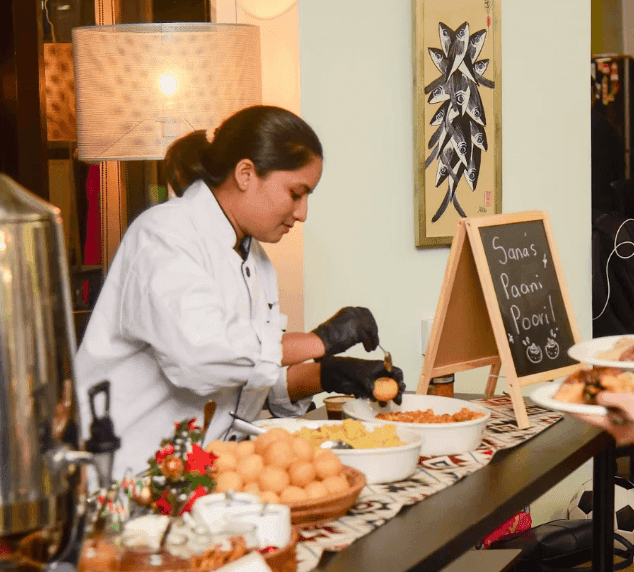
The foundation of everything we do: putting real, recurring income into the hands of people who would otherwise be locked out of formal employment in Malaysia.
In 2025, our 23 chefs across 19 home kitchens earned RM 1,045,295 directly through PichaEats — an average monthly income that more than tripled from before they joined. Since 2016, we've channelled over RM 7.2 million to chef families.
Limelight
A youth-focused training initiative launched in 2025, designed for refugee young adults aged 18–25. Using mocktail-making as a creative entry point, participants build confidence, communication, teamwork, and self-expression skills — and earn income from real events.
Limelight extends our impact beyond the kitchen, equipping refugee youth with skills, mindset, and possibility — beyond what traditional kitchen roles offer.
Physical Capital
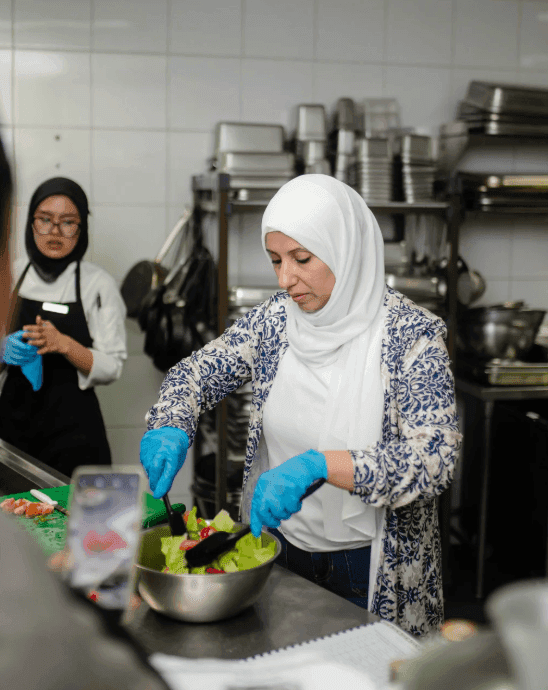
An income alone isn't enough — chefs need kitchens that can scale. Many of our chefs began with home kitchens that couldn't handle catering volumes. So we invest in the physical infrastructure that lets them grow.
A shared professional space for the community
Our centralised kitchen is more than a production facility — it's a learning environment where chefs, trainees, and part-time staff collaborate and gain hands-on experience in a professional kitchen setting.
By centralising larger orders and training activities, we create employment opportunities beyond individual home kitchens — letting more people from refugee and stateless communities take part in food preparation, packing, and operations.
Capacity Building
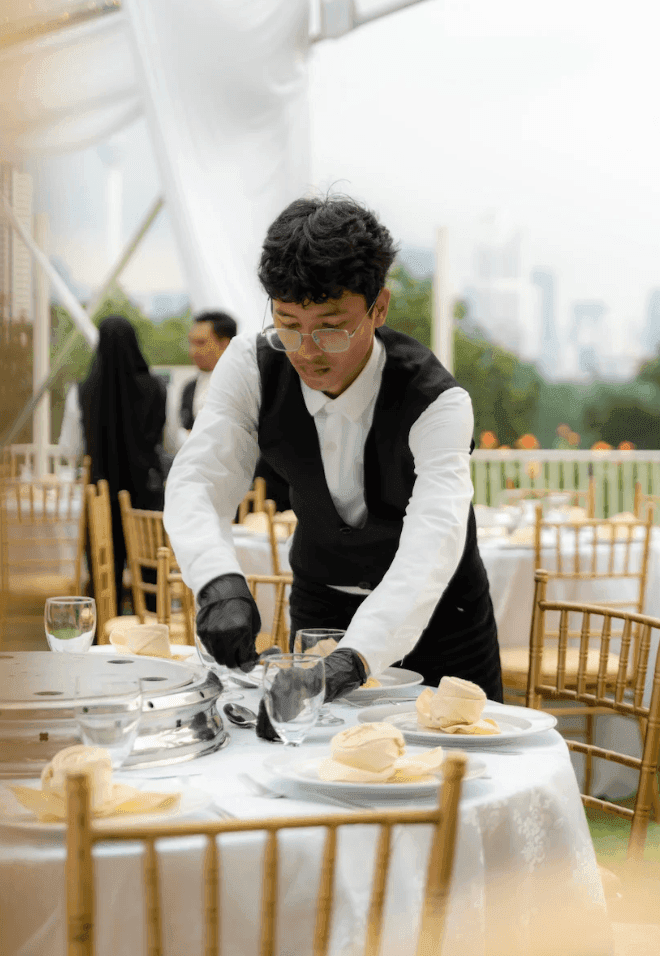
Across the communities we work with, potential is abundant. What's often missing is access to training — not just culinary, but the practical workplace skills that unlock long-term employability anywhere.
Skills our chefs reported gaining
Before joining PichaEats, I didn't know how to work effectively as part of a team. Now, I have learned how to communicate, cooperate, and support others while working together.— Picha Chef, anonymous submission
Skills that travel beyond our kitchen
Our 2025 training sessions combined practical workplace skills with personal development — supporting participants to build confidence, resilience, and clarity for any form of work, within or beyond PichaEats.
From trainee to Picha Chef
Our flagship up-skilling programme combines courses, workshops, and on-site practical training — letting trainees experience working in a real F&B business. Modules cover kitchen hygiene, food handling, finance and costing, digital marketing, and multi-cuisine cooking — finishing with a month of supervised real orders for actual clients.
I am truly grateful for this platform. It has given me excellent training, built my confidence, and helped me become stronger. The teachers were polite, supportive, and always explained everything with patience. This training has changed my life, and I am proud to be a Picha Chef.— Incubator graduate, anonymous submission
Building Lasting Relationships

A job changes a household. A community changes a life. Beyond income and training, our chefs and their families need belonging — to feel seen, supported, and never alone in a country where the system often makes them invisible.
Stepping out of the kitchen
Every few months, we take a break from the hustle and head out together — a beach day, a poolside gathering, or simply sharing a meal. These moments let chefs and team bond beyond work. Laughter, stories, and good food are what keep the community strong.
Showing up at home
Some of the best conversations happen over a home-cooked meal. Every few months, we visit our chefs to check in, share their joys and struggles, and simply spend time together. These visits help us understand them better — and remind them that they're never alone in this journey.
From plate to story
At every Picha Hangout, our chefs take the stage and share their stories — their journey, their challenges, their dreams. It's one thing to enjoy a good meal, but another to hear from the person who made it. Seeing clients connect with chefs on this deeper level is what makes the work mean something.
Legal Pathways for stateless individuals
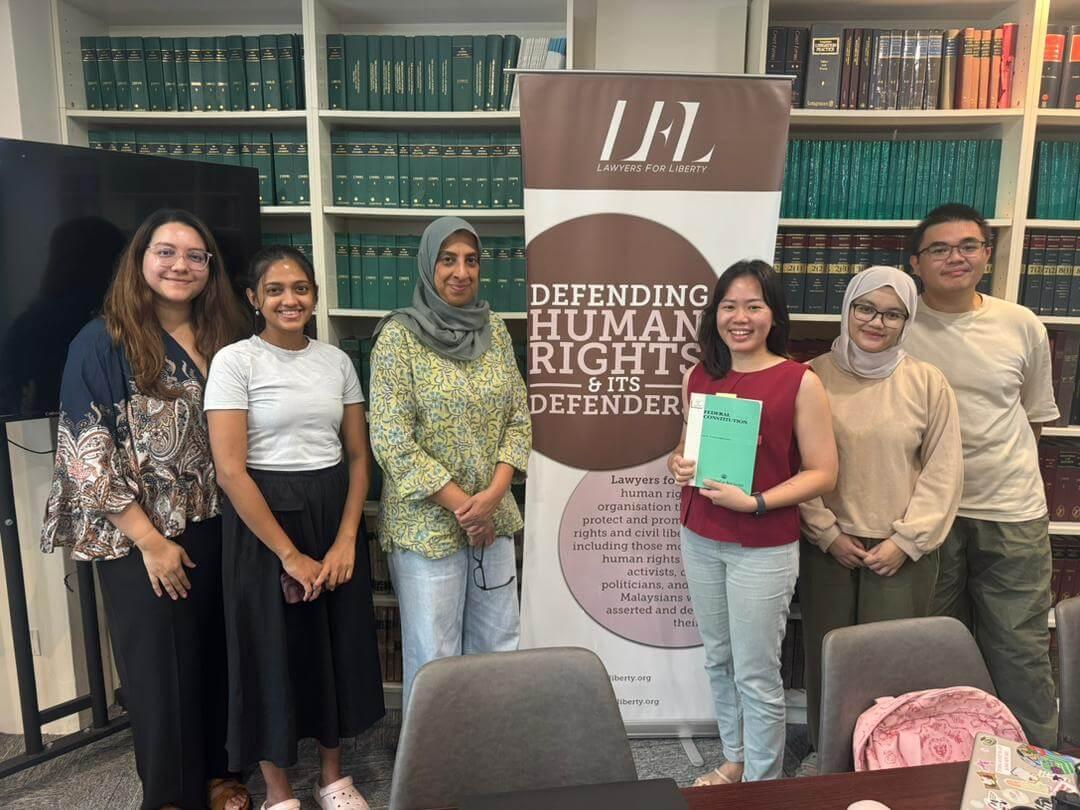
Malaysia is home to a significant population of stateless individuals — people who, due to gaps in nationality laws and documentation, face lifelong barriers to education, employment, and legal protection. Without formal recognition, many grow up locked out of systems meant to provide stability and opportunity.
Our involvement began through our partnership with Dignity for Children Foundation, where we recruited displaced and stateless youth as PichaEats interns. Working closely with them revealed that beyond skills and jobs, legal identity is a critical missing piece.
Partnership with Lawyers for Liberty
In 2025, PichaEats began supporting stateless individuals by working alongside Lawyers for Liberty to navigate documentation and legal processes. Through this collaboration, two new cases were initiated, with one submitted within the year.
Beyond case support, we've begun gathering volunteers to assist with coordination and follow-up — strengthening access to legal guidance for individuals who would otherwise face significant barriers navigating these processes alone.
By supporting legal navigation, we aim to complement our livelihood work with longer-term structural support — helping stateless individuals move closer to legal recognition, unlock access to education and work, and reduce the isolation they face navigating complex systems alone.